
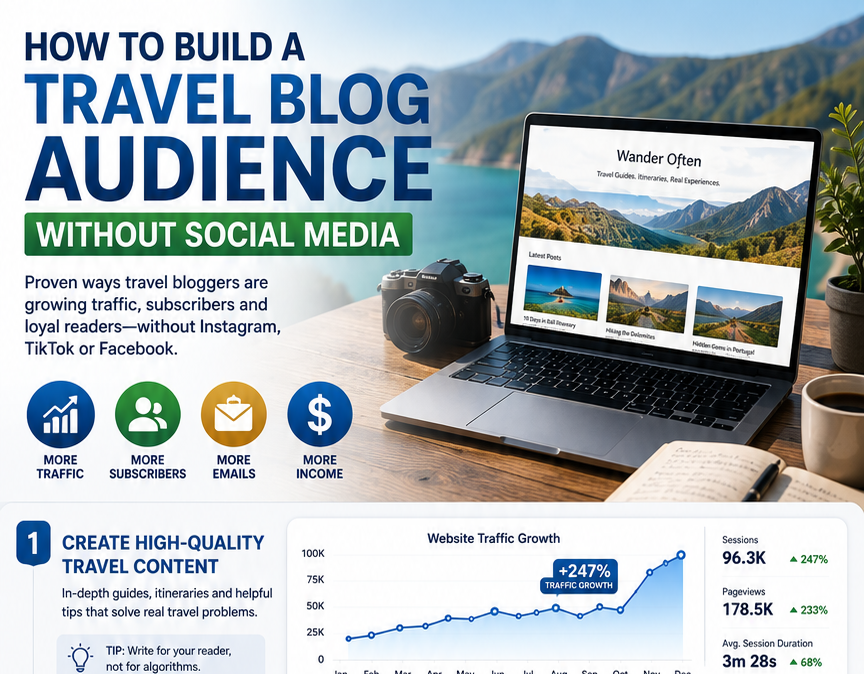
How to Build a Travel Blog Audience Without Social Media
Most people who start a travel blog assume they need to be everywhere on social media to grow. Instagram. TikTok. Pinterest. Facebook groups. YouTube. The list feels endless, and the pressure to show up on all of them simultaneously can make the whole thing feel exhausting before you even write your second post.
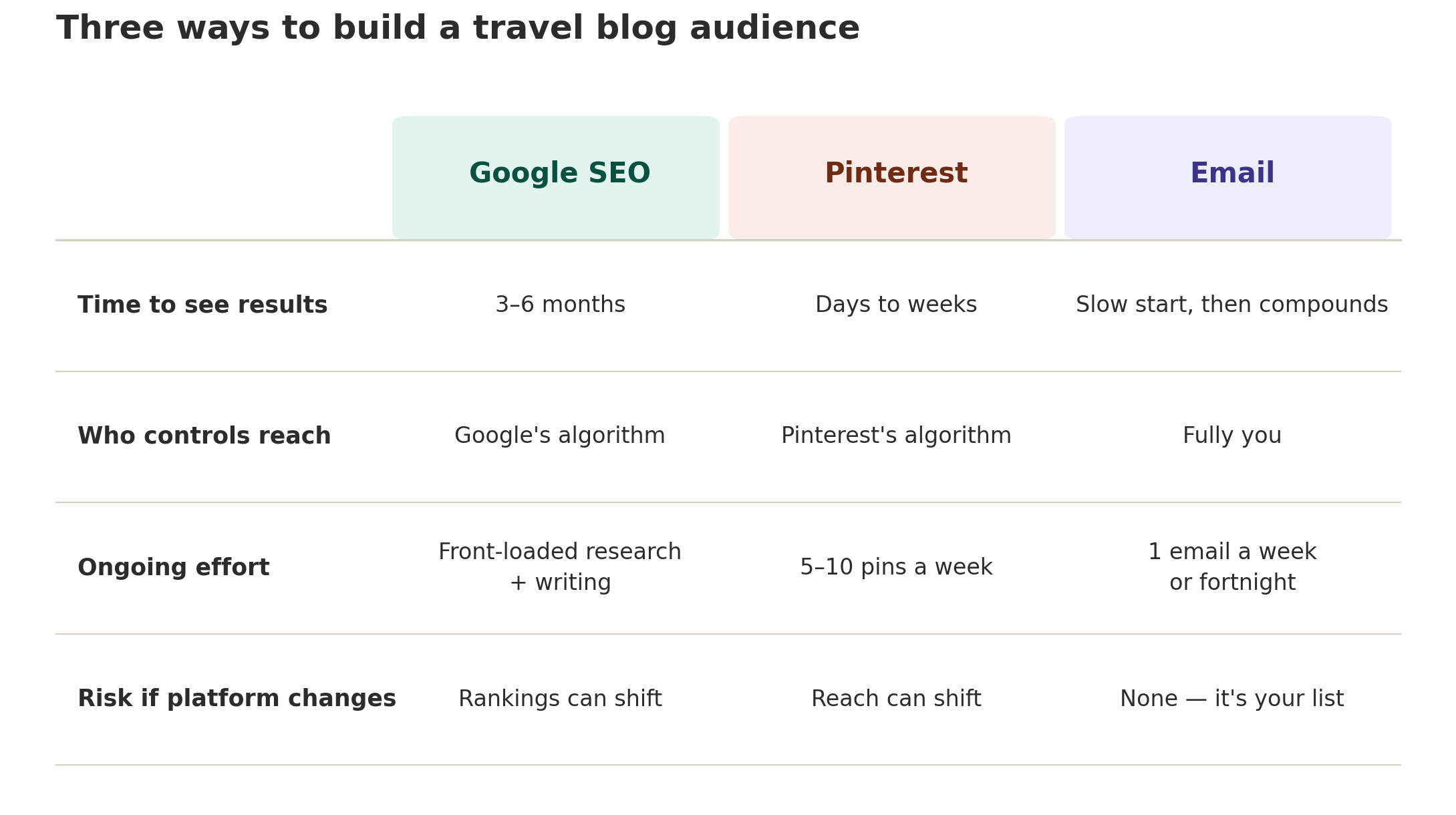
Here is what nobody tells you: you do not need social media to build a real, loyal travel blog audience. Thousands of bloggers grow consistent traffic and an engaged readership using only three things: Google search, Pinterest, and an email newsletter. This post breaks down exactly how each one works, and what you need to do to make them work for you.
Why Social Media Is Not the Only Path to Travel Blog Growth
Social media platforms are borrowed land. You do not own your followers there. When an algorithm changes, your reach drops overnight. When a platform loses users, your traffic goes with it. A lot of travel bloggers have learned this the hard way after building huge Instagram followings that suddenly stopped converting into actual website visitors.
Building your audience on channels you control is the smarter long-term plan. Search traffic from Google and Pinterest keeps coming in for months or years after you publish a post. Your email list belongs to you completely. Nobody can change an algorithm and wipe out what you have built.
This does not mean social media is bad. It means you should not depend on it as your only source of readers. If you are just starting out, or if you want to stop feeling chained to posting stories every day, the approach below gives you a more stable foundation.
Channel One: Google Search Traffic
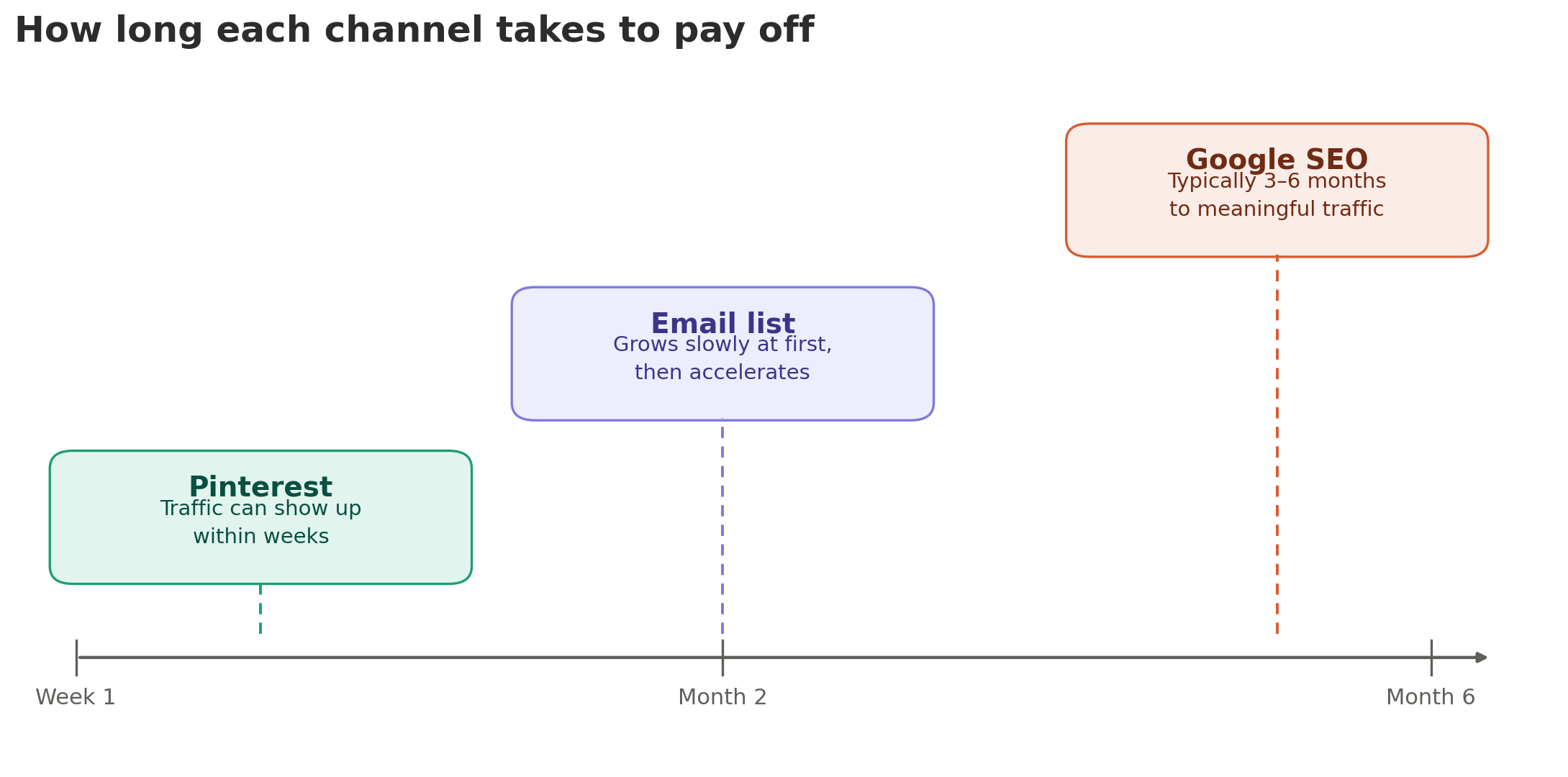
Building a travel blog audience through Google is challenging. But it is one of the most powerful and reliable things you can do, because people who find your blog through Google are actively searching for exactly what you wrote about.
Think about the difference. On social media, you push content at people who may or may not be interested. On Google, readers come to you already asking the question your post answers. That is a very different kind of reader, and they are far more likely to stay on your site, bookmark it, and come back.
How to Get Google Traffic as a Travel Blogger
You need to write posts that target specific search queries. Not “my trip to Japan” but “what to pack for Japan in winter” or “is Japan safe for solo female travellers.” These are things real people type into Google, and if your post answers them well, Google will send you readers.
Keyword research sounds technical but it really is not. Start by typing your destination or travel topic into Google and looking at the auto-complete suggestions. Those are real searches. The “People Also Ask” boxes on Google results pages are gold. They show you the exact questions people want answered, and each one is a potential blog post.
Your target keyword should appear in your post title, in your first paragraph, in at least one subheading, and naturally throughout the body. Do not stuff it in awkwardly. Just write naturally about the topic, and the keyword will appear where it makes sense. According to Ahrefs, most travel blogs that grow consistently through search share one thing in common: they target low-competition, specific keywords rather than broad ones in the early stages.
For a deeper look at picking the right niche to help your content rank on Google, Travel Blog Niche Ideas That Actually Rank on Google covers this really well.
Channel Two: Pinterest Traffic
Pinterest is not social media in the way most people think. It is actually a visual search engine. People go to Pinterest the same way they go to Google: to find answers, inspiration, and ideas. They search “things to do in Bali for a week” or “budget travel Europe tips,” and the results that come up are pins that link back to blog posts.
This is why Pinterest can send extraordinary amounts of traffic to a travel blog, even a brand new one. You do not need followers to get traffic on Pinterest. You need good pins that appear in search results for the right keywords.
How to Use Pinterest to Grow Your Travel Blog
Create vertical images for every blog post you publish. The ideal Pinterest image size is 1000 x 1500 pixels. Use a simple tool like Canva to design them. Add your post title as readable text on the image, use a clear and attractive photo, and include your website URL at the bottom.
When you write the pin description, think about it like a mini version of your Google keyword strategy. Include the search term someone would type to find your post. Write two or three sentences that describe what the reader will learn or find. Pinterest reads these descriptions and uses them to decide when to show your pin in search results.
Consistency matters on Pinterest more than volume. Pinning five to ten times a week with good descriptions will outperform pinning fifty times in one day and then going quiet. A scheduler like Tailwind makes this easier. Many travel bloggers report Pinterest as one of the top traffic drivers for lifestyle and travel content creators, with most reporting that Pinterest accounts for 40 to 60 percent of their total referral traffic.
Channel Three: Your Email Newsletter
Your email list is the most valuable thing you can build as a travel blogger. Full stop. It is yours. Nobody can take it away. When someone hands you their email address, they are telling you they want to hear from you directly, not just when an algorithm decides to show them your post.
A lot of travel bloggers put off building their list because they do not know what to say. They assume they need thousands of readers before they start. Neither of these is true. You can start an email list with zero subscribers, and the best time to set it up is before you think you need it.
What to Put in Your Travel Blog Newsletter
Your newsletter does not need to be complicated. A weekly or fortnightly email that shares your latest post, one travel tip, and something personal from your week builds a genuine relationship with your readers over time. People open emails from people they feel they know. Keep it short, keep it real, and write it the way you would write to a friend.
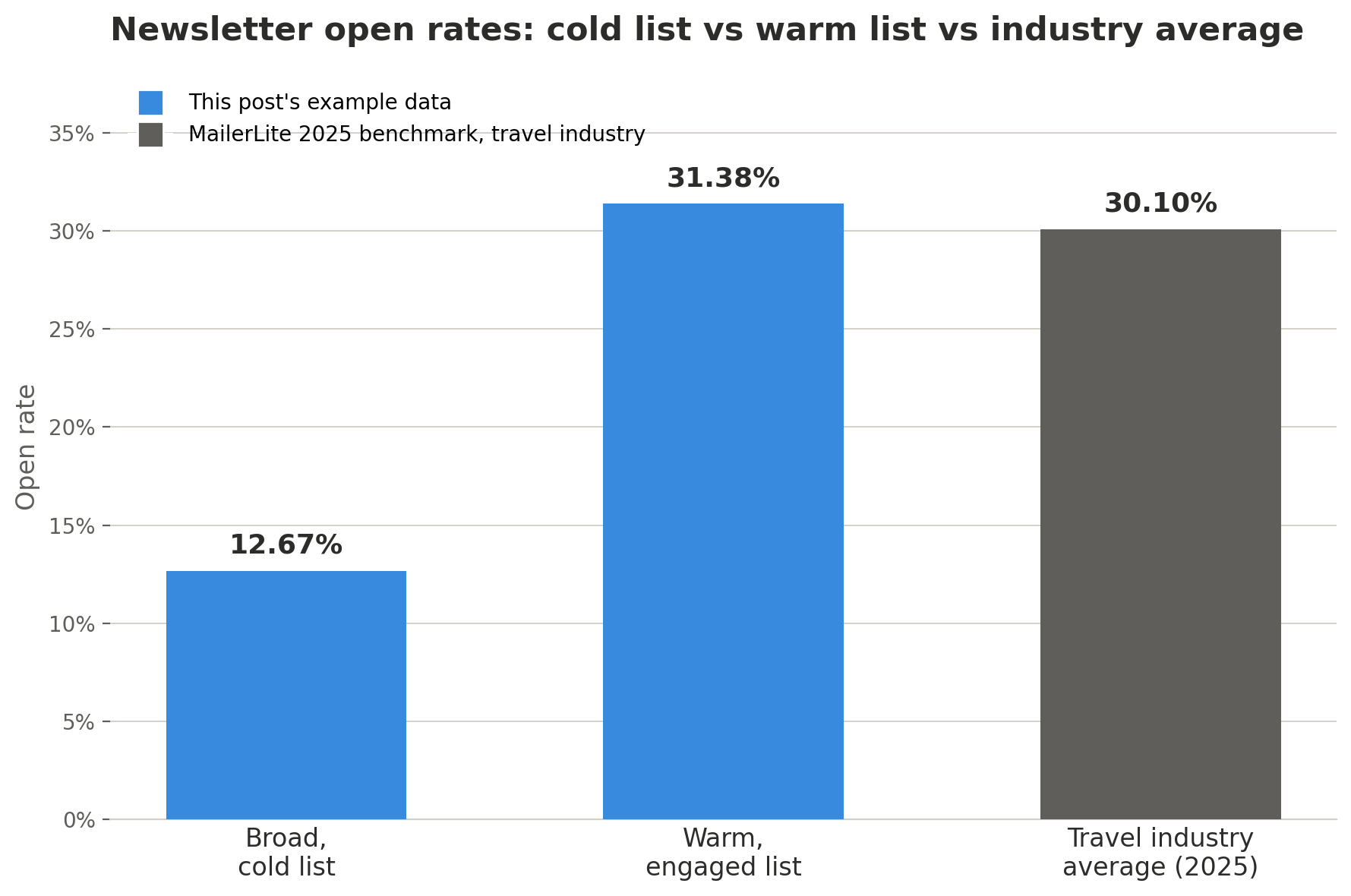
An open rate of 12.67 percent and 31.38 percent, reflects two different things. The lower number is a typical industry average for broad email lists. The higher number is what happens when your list is warm, your subject line is good, and your readers actually want what you send. MailerLite’s email benchmark data consistently shows that travel and lifestyle newsletters outperform industry averages when the sender has a clear niche and a personal voice.
To get people to sign up, offer something specific and immediately useful. Not just “subscribe for travel tips” but “get my free packing list for carry-on only travel” or “download my one-week Portugal itinerary.” Give people a real reason to hand over their email address, and they will.
If you are still setting up your blog and have not sorted your platform yet, Best Travel Blogging Platforms Compared walks you through which options make it easiest to integrate an email list from day one.
How These Three Channels Work Together
The real power comes when you connect all three. You write a post optimised for Google search. You create a Pinterest image for it and pin it consistently. Inside the post, you offer a freebie that captures email subscribers. Those subscribers read your newsletter, click through to your newer posts, and share them with friends.
That loop, Google brings in cold readers, Pinterest amplifies your content, and email converts occasional visitors into loyal regulars, is how you build a travel blog audience that does not depend on any social media platform.
The Mindset Shift That Makes This Work
The mistake most bloggers make is measuring success by the wrong thing too early. They check their Google Analytics every day in the first month and feel discouraged when the numbers are small. Meanwhile, they are ignoring the fact that their SEO foundation is getting stronger with every post, their Pinterest account is starting to gain momentum, and their email list has twenty subscribers who genuinely love what they write.
Twenty real readers who open every email and click through to your posts are worth more than two thousand Instagram followers who scroll past your content without clicking anything. Audience quality beats audience size every time. Once you truly believe that, this whole strategy starts to feel motivating rather than slow.
If you want to eventually turn this audience into income, the mechanics of monetisation become much more realistic when your audience sits on owned channels. How to Make Money as a Travel Blogger in 2026 covers the specific income streams that work best for bloggers building through search and email rather than social media.
Practical Actionable Tips You Can Apply Right Now
Here are five things you can do today to start building your travel blog audience without social media:
1. Do your first keyword research session today. Open Google, type in your next travel destination or topic, and write down every auto-complete suggestion and “People Also Ask” question you see. Choose one specific question for your next post. That is your keyword target.
2. Set up your email list before you think you need it. Use a free tool like Mailchimp or MailerLite to create a simple signup form. Embed it in your blog sidebar and at the bottom of every post. Do not wait until you have traffic. Start capturing emails from your very first readers.
3. Design one Pinterest template in Canva. Create a 1000 x 1500 px template with your blog colours and a space for your post title. Use it for every new post you publish. Consistency in your pin design helps readers recognise your content in search results.
4. Write a welcome email for new subscribers. When someone signs up, what do they get? Write a simple, warm welcome email that tells them who you are, what your blog is about, and what your best post is. Set it as an automated welcome message so every new subscriber gets it immediately.
5. Audit your last five posts for SEO basics. Check that each one has your target keyword in the title, in the first paragraph, and in at least one subheading. Add internal links between your posts if they are not already there. These small fixes can improve how Google reads and ranks your existing content.
You do not need to be on every platform to build a travel blog people love and return to. You need a clear strategy, a little patience, and consistent effort in the right places. Search, Pinterest, and email are enough. They have been enough for many successful travel bloggers, and they can be enough for you too.
Ready to start building? Pick one of the five tips above and do it today, not tomorrow. That is how momentum starts.
More from SunnyOnlineTravel: How to Start a Travel Blog: A Step-by-Step Guide | How to Pitch a Travel Article to a Magazine | Travel Blogging Resources


