
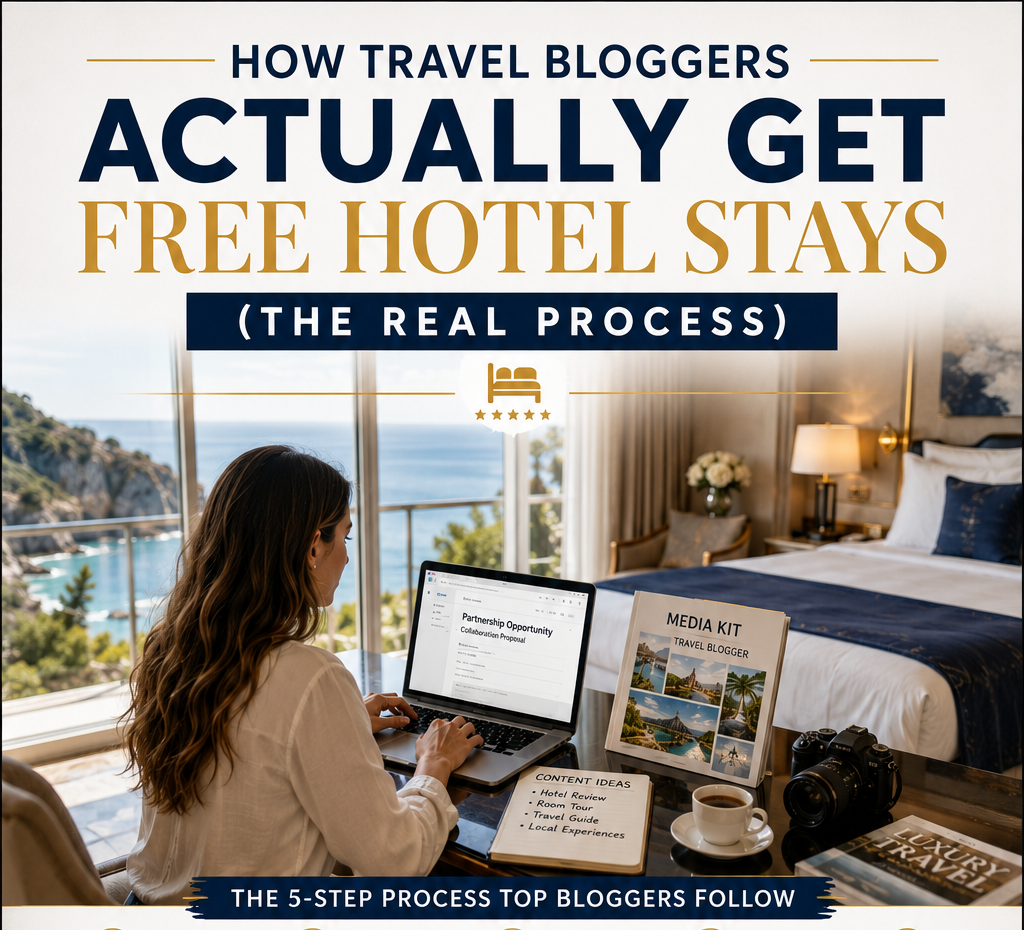
How Travel Bloggers Actually Get Free Hotel Stays (The Real Process)
You have probably wondered how some travel bloggers seem to stay at stunning properties without paying full price. Maybe you have seen a blogger post from a cliffside suite overlooking the Amalfi Coast or a rooftop pool in Bali, and thought: how did they pull that off?
The honest answer is that it is not magic. It is not about having millions of followers either. Travel bloggers who land free hotel stays follow a very specific process, and most of the bloggers who never hear back from hotels are missing one critical step in that process. This post walks you through exactly what that process looks like, from building your media kit all the way to turning one hotel stay into a long-term partnership that keeps delivering opportunities.
What “Free Hotel Stays” Actually Means for Travel Bloggers
First, a quick reality check. A complimentary hotel stay is not a freebie in the way most people imagine. It is a business exchange. The hotel gives you accommodation in return for content: blog posts, photographs, social media coverage, and the kind of authentic storytelling that reaches an engaged audience of potential guests.
Hotels that collaborate with bloggers are not doing it out of generosity. They are doing it because it works for them. A well-written hotel review from a trusted travel blogger with a loyal readership can bring in bookings worth far more than the cost of one complimentary night. When you approach a hotel, you are not asking for charity. You are proposing a business deal where both sides gain something real.
That framing matters. It changes how you write your pitch, how you build your media kit, and how you follow up after the stay. Keep it in mind throughout every step below.
Step One: Build a Media Kit That Does the Talking for You
Your media kit is your professional calling card. Think of it like a CV, but for your blog. It tells a hotel’s PR manager everything they need to know about who you are, who reads your content, and what you can deliver in exchange for a stay.
A strong travel blogger media kit includes your blog’s monthly page views, your email list size, your social media following across each platform, and your audience demographics. Age range, location, and interests all matter. A hotel wants to know that your readers are the kind of people who might actually book a stay there.
What to Include on Every Page
Keep your media kit to two or three pages maximum. Lead with a short, confident bio that describes your niche and your audience clearly. Follow that with your key statistics presented visually, not buried in paragraphs. Include two or three examples of your best previous content, ideally hotel reviews or destination pieces with strong photography.
Add a rate card on the final page. Even if you are open to negotiating, having a rate card signals that you treat your blog as a professional business. Hotels respond better to bloggers who present themselves this way. According to Travel Tractions, a media kit that focuses on what you can deliver for the brand, rather than what you want to receive, is the single biggest factor in whether a pitch gets a response.
Design matters too. Use Canva or a similar tool to create something that looks polished and on-brand. A poorly formatted Word document signals the opposite of professionalism. Your media kit is the first impression a hotel has of your work, so make it count.
Step Two: Grow Your Audience Before You Start Pitching
Here is the step most bloggers skip, and it is exactly why most bloggers never hear back. Hotels do not collaborate with blogs. They collaborate with audiences. If your blog does not yet have an engaged readership, no amount of well-crafted pitching will get you very far.
This does not mean you need a hundred thousand followers. Many boutique hotels, guesthouses, and independent properties work with bloggers who have smaller but highly targeted audiences. A blogger with five thousand monthly readers who all care about sustainable travel in Southeast Asia is more interesting to a responsibly-run eco-resort than a general lifestyle blogger with fifty thousand passive followers.
How to Build an Audience Hotels Care About
Focus on your niche. Write consistently for a specific type of traveller. Build your email list from day one. Keep your social media active and engaged, because PR managers look at your comment section, not just your follower count. One hundred genuine comments on a recent post tells a far better story than ten thousand followers and three likes per photo.
For practical guidance on building that readership through search and owned channels rather than relying on social media algorithms, the SunnyOnlineTravel travel tips section has resources worth working through.
Step Three: Pitch Hotels Professionally
This is where most bloggers either get it right or lose the opportunity entirely. A professional pitch email is specific, concise, and focused on what the hotel gets, not what you want.
Do your research before you write a single word. Visit the hotel’s website. Look at their Instagram. Read their most recent press coverage. Find the name of the PR manager or marketing contact if you can, because a pitch addressed to a specific person always performs better than one sent to a generic inbox. Most hotel websites list a press or media contact in their footer or media section.
What Your Pitch Email Needs to Say
Your pitch email should do four things. Introduce yourself and your blog briefly. Explain why this specific hotel is a good fit for your audience. Outline what content you will create and where it will appear. Propose specific dates and keep them flexible.
What it should not do is ask for a free stay in so many words. Frame it as a media collaboration or a press stay inquiry. Ask whether they work with travel content creators on a complimentary media basis. The wording signals that you understand how these arrangements work, and that shifts the conversation from “blogger asking for a freebie” to “media professional proposing a partnership.”
Keep the email to four or five short paragraphs. Attach your media kit as a PDF. Include links to two or three of your strongest relevant posts, not your entire archive. The Blogging Societies recommend including your exact proposed dates in the initial email, because it allows the hotel to check availability immediately and reduces unnecessary back-and-forth.
Expect that most pitches will not get a reply. That is normal and has nothing to do with whether you are good enough. Hotels are busy, PR contacts manage dozens of enquiries, and timing plays a huge role. Follow up once, politely, about ten days after your original email. Then move on and pitch the next property.
Step Four: Deliver Great Content That Makes Hotels Want to Work With You Again
Landing the stay is only the halfway point. What you do with it determines whether it leads to more opportunities or becomes a one-off.
Create content that makes the hotel look genuinely wonderful, because your job during the stay is to capture it at its best. Wake up early for the light. Photograph the details that guests remember: the texture of the linens, the view from the window, the way the coffee arrives. Write honestly and warmly about the experience. Show the kind of traveller your readers are, and show them enjoying exactly what this hotel offers.
Content Ideas That Perform Well
A detailed hotel review post with original photography and a personal perspective consistently performs well both in Google search and in convincing hotels to work with you again. Add a room tour if your blog includes video. Write a local area guide that features the hotel as a natural base. Share a “is it worth it” style post that answers the question your readers are actually asking before they book.
Deliver your content on or before the agreed timeline. Send the hotel links to everything you publish. If you mentioned specific team members by name, let them know. These small gestures build goodwill that turns into the next invitation.
Step Five: Build Long-Term Relationships That Open More Doors
The bloggers who land the best hotel collaborations are not always the ones with the biggest platforms. They are the ones who treat every partnership as the beginning of a relationship, not a transaction to close.
After your stay, follow the hotel on social media and engage with their content genuinely. Send a thank-you email once your content goes live and share your traffic and engagement data with them. If you visit the same destination again, reach out and let them know. Mention the hotel naturally in future posts when it is relevant. These touchpoints keep you in the PR manager’s memory long after your visit.
How Relationships Lead to Better Opportunities
A hotel that has worked with you once and had a good experience will recommend you to other properties, pass your name to tourism boards, and invite you back for new openings or seasonal events. This network effect is how the bloggers you admire seem to get invited everywhere. It rarely happens through cold outreach alone. It grows from the reputation you build one stay at a time.
For a broader look at turning your blog into a sustainable income, including how hotel collaborations fit into a wider monetisation strategy, How to Make Money as a Travel Blogger covers the full picture in detail.
The One Critical Step Most Bloggers Skip
The infographic at the top of this post mentions that most bloggers never get a reply because they skip one critical step. That step is building their audience before they start pitching.
It is tempting to pitch hotels as soon as you launch your blog. You are excited, you are confident in your writing, and you want to start generating collaborations as soon as possible. But a hotel’s PR manager will look at your website, check your traffic if they can, look at your social media engagement, and make a decision based on what they see. If your blog is three months old and has minimal content, the answer will almost always be no, regardless of how well-written your pitch is.
Give yourself six to twelve months of consistent content creation before you begin pitching. Use that time to build your audience, develop your media kit, and create the kind of portfolio that makes hotels say yes on first read. The wait feels frustrating, but the bloggers who do this groundwork land far better opportunities, and they land them consistently, not just once.
Practical Actionable Tips You Can Apply Right Now
Here are five things you can start on today to move toward your first hotel collaboration:
1. Create or update your media kit this week. Open Canva, find a clean two-page template, and fill it with your blog stats, audience demographics, a short bio, and links to your three best posts. Export it as a PDF and save it somewhere easy to access. You want to be ready to attach it to a pitch at any moment.
2. Research five hotels in your next destination. Visit each hotel’s website and find the name of the PR or marketing contact. Write their names and email addresses in a spreadsheet. Note one specific thing about each property that connects it to your blog’s niche and audience. This research makes your pitch email feel specific and considered.
3. Write your pitch email template. Draft a base email that you can personalise for each hotel. Keep it to four paragraphs: who you are, why this hotel fits your audience, what content you will create, and a proposed date range. Save this template and refine it each time you send it based on what gets responses.
4. Audit your engagement rate before you pitch. Divide your average post comments or social media interactions by your follower count and multiply by one hundred. An engagement rate above two percent is healthy and worth highlighting in your pitch. If it is lower, spend the next few weeks focusing on building genuine conversation with your audience before you reach out to hotels.
5. Publish one hotel or accommodation review right now. Even if you paid for the stay. A strong existing review shows hotels exactly what their content will look like if they work with you. It is one of the most persuasive things you can include when you start pitching, because it replaces promises with proof.
Free hotel stays are real. They happen regularly for travel bloggers who approach the process with professionalism, patience, and a genuine focus on delivering value. Build the foundation first, pitch with confidence, deliver outstanding content, and treat every partnership as the start of something longer. That is the real process, and it works.
Ready to land your first hotel collaboration? Start by opening Canva right now and drafting the first page of your media kit. Everything else builds from there.
More from SunnyOnlineTravel: Step-by-Step: Booking a One-Way International Flight | Travel Tips | How to Start a Travel Blog


